Bringing Joy to Design: The Playful Charm of Ceria Child
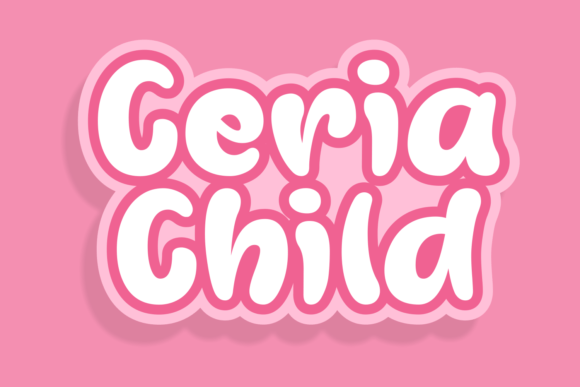
In the vast universe of typography, there exists a special category dedicated not just to legibility, but to emotion. While serif fonts whisper authority and sans-serifs shout modern efficiency, there is a distinct need for typefaces that simply smile. Enter Ceria Child, an adorable and chubby font that has quickly become a favorite for designers seeking to inject a genuine sense of playfulness into their projects. With its cute, rounded characters, this typeface does more than just display text; it sets a mood. It captures the essence of childhood joy, making every letter feel like a hug and every word a smile.
When you first encounter Ceria Child, the immediate impression is one of softness. There are no sharp edges or aggressive angles here. The design philosophy behind this font revolves around the organic, unpolished shapes often found in children's handwriting or storybook illustrations. This makes it an incredibly versatile tool for anyone looking to create a friendly vibe. Whether you are drafting a birthday invitation for a toddler or designing packaging for a line of organic baby snacks, the font naturally aligns with themes of innocence, fun, and warmth.
The Anatomy of Cuteness
What exactly makes a font "cute"? In the case of Ceria Child, it is the deliberate exaggeration of roundness. The characters possess a inflated, balloon-like quality that mimics the way children often draw letters—big, bold, and full of life. The stroke width is generally uniform and thick, giving the text a sturdy, approachable appearance. This chubbiness is not a flaw; it is a feature that enhances readability at larger sizes while maintaining a whimsical aesthetic.
Beyond the roundness, the spacing and proportions play a crucial role. The font avoids tight kerning, allowing each character to breathe. This openness contributes to the airy, lighthearted feel that defines the typeface. When you typeset a headline using Ceria Child, the result is never stiff or corporate. Instead, it feels inviting, as if the text itself is waving hello to the viewer. This psychological impact is vital in design, where the goal is often to lower barriers and create an instant emotional connection with the audience.
Ideal Applications for Kid-Centric Designs
The most obvious home for Ceria Child is in the realm of children's products and services. However, its utility goes far beyond just slapping it on a toy box. Consider the workflow of a graphic designer tasked with creating a suite of materials for a local daycare center. They need flyers, newsletter headers, and signage that reassure parents while exciting children. Using a standard font might make the materials look too institutional. Switching to Ceria Child instantly transforms the visual language, signaling safety, fun, and care.
Similarly, the font shines in the world of event planning, specifically for birthdays and baby showers. Invitations set the tone for an event before a single guest arrives. An invitation written in Ceria Child promises a celebration that is relaxed and joyful. It works beautifully for:
- Birthday Invitations: Perfect for ages 1 through 10, adding a festive touch.
- Baby Shower Decor: From welcome signs to cupcake toppers, the font adds sweetness.
- Educational Materials: Flashcards and worksheets become more engaging for young learners.
- Children's Book Covers: Titles pop with personality, drawing in young readers.
It is not limited to print, either. In digital spaces, such as apps designed for early education or family-oriented blogs, Ceria Child serves as an excellent header font. It breaks up the monotony of screen text and guides the user's eye with a sense of whimsy. However, designers must remember that due to its decorative nature, it is best used for headlines, short phrases, or display text rather than long body paragraphs, where legibility over extended reading is paramount.
Integrating Playfulness into Modern Workflows
In an era where minimalism and flat design often dominate the creative landscape, there is a growing counter-movement towards "human-centric" design. Brands are realizing that consumers crave authenticity and emotional resonance. This is where Ceria Child finds a surprising niche outside of strictly juvenile markets. Artisanal food brands, particularly those selling cookies, candies, or homemade jams, often utilize this font to convey a sense of handcrafted care. It suggests that the product was made with love, much like a child's drawing.
For freelance designers and small business owners, incorporating such a specific typeface into their asset library is a strategic move. It allows them to pivot quickly between serious corporate identities and lighthearted promotional campaigns without needing to commission custom lettering. The availability of Ceria Child means that high-quality, character-driven typography is accessible for projects with modest budgets. It levels the playing field, allowing a small bakery to have branding that feels just as warm and inviting as a major corporation's holiday campaign.
When working with this font, pairing is key. Because Ceria Child is so distinct, it demands a neutral partner for body text. A clean, geometric sans-serif often works best to ground the design. This contrast ensures that the playfulness of the header doesn't overwhelm the information hierarchy. For example, a poster for a summer camp might feature the camp name in Ceria Child at the top, while the schedule and details are listed below in a simple, readable font. This balance maintains professional standards while delivering the desired cheerful vibe.
Why Designers Choose Ceria Child
There are countless fonts available, so why do professionals repeatedly return to Ceria Child? The answer lies in its consistency and versatility within its niche. Some "fun" fonts can look messy or amateurish if not handled carefully. Ceria Child, however, maintains a structured integrity. The curves are smooth, and the baseline is stable. This makes it reliable for both digital screens and high-resolution print outputs.
Furthermore, the emotional payload of the font cannot be overstated. In marketing psychology, color and shape dictate how a consumer feels about a brand. Rounded shapes are universally associated with comfort and lack of threat. By utilizing Ceria Child, designers are tapping into this primal association. It disarms the viewer. It makes a sale feel less like a transaction and more like an interaction. For industries relying on trust and warmth—such as pediatric healthcare, family photography, or educational toys—this subtle psychological cue is invaluable.
Consider the scenario of a non-profit organization running a donation drive for children in need. Their messaging needs to be urgent yet hopeful. A harsh, bold font might induce anxiety, while a delicate script might seem too fragile. Ceria Child strikes the perfect balance, offering a visual representation of the children they are helping—resilient, happy, and full of potential. It humanizes the data and statistics, reminding donors of the smiles they are helping to preserve.
Practical Tips for Maximum Impact
To get the most out of Ceria Child, context is everything. Do not force it into a setting where it clashes with the message. It would be inappropriate for a legal document or a warning label. However, for any project aiming to evoke nostalgia, happiness, or youth, it is a top-tier choice. When coloring the text, pastel shades often complement the rounded forms beautifully, though bold primary colors can also work well to mimic classic toy aesthetics.
Animation is another frontier where this font excels. In video editing or motion graphics, the bouncy nature of the letters lends itself well to movement. Imagine the letters of Ceria Child popping onto the screen one by one, slightly wobbling as they settle. This dynamic capability brings static designs to life, making it a powerful asset for social media content, YouTube intros for family vloggers, or animated storybooks.
Ultimately, the decision to use Ceria Child is a decision to prioritize emotion over sterility. It is a declaration that the project at hand values joy. In a world that can often feel serious and demanding, sprinkling some cheer into your work with a font that embodies childhood innocence is a refreshing change of pace. It reminds us that design is not just about function; it is about feeling. With Ceria Child, every project becomes an opportunity to share a smile, proving that sometimes, the chubbiest letters carry the lightest hearts.