Evaluating Grosball: A Strategic Choice for Sports Typography and Branding
In the realm of sports graphic design, typography does more than convey information; it sets the tone for the entire visual identity. Whether designing a match-day poster, a team jersey, or a digital campaign, the font choice must communicate energy, movement, and authority. Grosball has emerged as a specialized display font devoted specifically to this niche, offering a distinct aesthetic tailored primarily to football (soccer) design. However, for designers and brand managers evaluating resources, understanding where Grosball fits within the broader landscape of sports typography is essential for making an informed decision.
The Distinct Character of Grosball
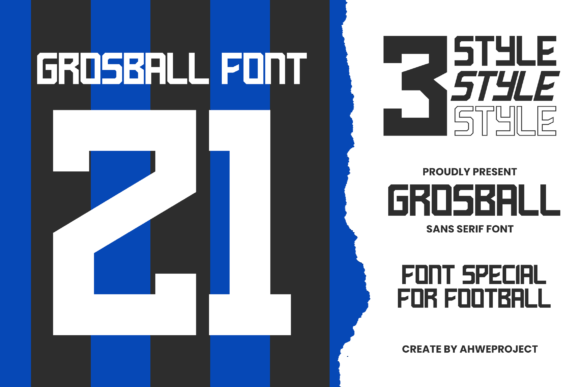
Grosball is not a general-purpose typeface. It was engineered with a specific intent: to capture the dynamism and physicality of football. Its letterforms typically feature bold strokes, extended widths, and angular cuts that mimic the sharp movements and structural integrity found in athletic gear and stadium signage. Unlike serif fonts that suggest tradition or sans-serif neutrals that prioritize readability above all else, Grosball leans heavily into expression.
The font's geometry often includes slanted terminals and high-contrast thickening, creating a sense of forward momentum even when static. This makes it particularly effective for headlines where impact is paramount. When applied to contexts like magazine covers or event posters, Grosball immediately signals "sports" to the viewer without needing additional iconography. Its dedication to football design means it avoids the generic look of standard bold fonts, providing a customized feel that resonates with fans and players alike.
Comparing Display Styles: Where Grosball Stands
When selecting a typeface for a sports project, designers usually navigate between several categories: geometric sans-serifs, condensed grotesques, and dedicated display fonts. Understanding how Grosball compares to these alternatives helps clarify its best use cases.
Geometric Sans-Serifs: Fonts in this category are known for their clean circles and straight lines. They are versatile and highly legible at small sizes but can sometimes lack the aggressive personality required for high-energy sports branding. Grosball offers a more stylized alternative, sacrificing some neutrality for character. If a brand needs a font that works equally well for legal disclaimers and headlines, a geometric sans might be safer. However, if the goal is to dominate a visual space, Grosball provides a stronger voice.
Condensed Grotesques: These are popular in sports because they allow long team names or player lists to fit into narrow spaces, such as the back of a jersey. While Grosball can be used for logos and short text, it is generally wider and more decorative than a pure condensed utility font. Designers should consider Grosball for primary branding elements—like a club crest or a tournament title—while potentially pairing it with a more functional condensed font for roster lists or statistical data.
Generic Display Fonts: Many display fonts claim to be "sporty" by simply adding italics or outlines. Grosball distinguishes itself through a cohesive design language rooted in football culture. It avoids the clichéd "speed lines" or excessive distortion found in lower-quality alternatives, maintaining a professional edge that suits both amateur leagues and professional organizations.
Practical Applications and Use Cases
The versatility of Grosball extends beyond just the pitch. Its robust structure makes it suitable for a variety of media formats, provided the context aligns with its bold nature.
- Jerseys and Kits: The font's thick strokes ensure high visibility from a distance, making it a strong candidate for numbering and naming on uniforms. However, care must be taken to ensure the specific characters meet league regulations regarding legibility.
- Posters and Match Day Graphics: For promotional materials, Grosball excels in creating hierarchy. Its weight draws the eye immediately to the headline, such as the teams playing or the date of the event.
- Magazines and Editorials: In publication design, using Grosball for pull quotes or section headers can break up text-heavy layouts and inject energy into the reading experience.
- Apparel and Merchandise: T-shirts and hoodies featuring Grosball often carry a streetwear appeal, bridging the gap between athletic performance wear and casual fashion.
- Logo Design: For new clubs or esports teams entering the football sphere, Grosball provides a ready-made foundation for a logo that feels established and energetic.
Tradeoffs and Limitations to Consider
No single font is the solution for every design problem, and Grosball is no exception. Its specialization is both its greatest strength and its primary limitation. Because it is a display font devoted to sports design, it lacks the extensive character sets and subtle weight variations found in comprehensive type families.
Legibility at Small Sizes: The intricate details and heavy weighting that make Grosball striking at large sizes can become muddy when scaled down. It is generally not recommended for body copy, footnotes, or mobile interface elements where clarity is critical. In these scenarios, pairing Grosball with a clean, neutral sans-serif for secondary text is a prudent strategy.
Tone Appropriateness: The aggressive and energetic nature of Grosball may not suit every brand within the sports ecosystem. Organizations focusing on youth development, community wellness, or administrative aspects of the sport might find the font too intense. In such cases, a softer, rounded sans-serif might better convey approachability and inclusivity.
Format Constraints: As a niche resource, Grosball may not offer the same range of file formats or language support as major commercial foundries' flagship fonts. Designers working on international campaigns should verify glyph coverage to ensure accented characters and non-Latin scripts are supported if needed.
Making the Decision: Is Grosball Right for Your Project?
Choosing a typeface is a strategic decision that impacts brand perception. Grosball is the right choice when the objective is to evoke the specific spirit of football with immediacy and power. It is ideal for projects where the visual hook is more important than dense information delivery.
If you are designing a logo for a new futsal league, creating a poster for a championship final, or launching a line of fan merchandise, Grosball offers a tailored solution that generic fonts cannot match. Its design DNA is encoded with the aesthetics of the game, reducing the need for extensive customization to achieve a "sporty" look.
Conversely, if your project requires a highly versatile system that spans from app interfaces to printed manuals, or if the brand voice needs to be understated and corporate, you may need to look toward broader type families. In these instances, Grosball could serve as an accent font for headlines, while a more utilitarian typeface handles the heavy lifting of communication.
Ultimately, the value of Grosball lies in its focus. By dedicating itself to football design, it removes the guesswork for creators seeking authenticity in their sports visuals. When evaluated against the specific needs of the project—considering factors like medium, audience, and message—it stands out as a potent tool for those who want their typography to play as hard as the athletes it represents.