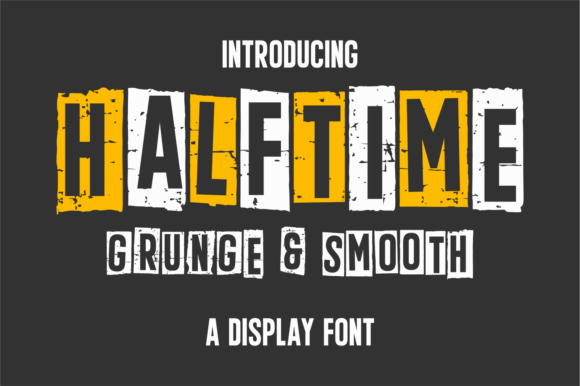
Halftime: The Bold Display Font Defining Modern Industrial Design
In the crowded visual landscape of the digital age, capturing attention within seconds is not just a goal; it is a necessity. For designers, marketers, and brand strategists, the choice of typography often dictates the success of a campaign before a single image is processed. Enter Halftime, a bold and impactful display font that has quickly become a go-to resource for professionals seeking to make a statement. With its strong, blocky letterforms and sharp edges, Halftime cuts through the noise, offering a distinct aesthetic that balances modern industrial vibes with timeless masculine strength.
The relevance of Halftime extends far beyond its immediate visual appeal. It represents a shift in how brands communicate authority and reliability. In an era where minimalism often leans towards the fragile or the overly soft, there is a growing counter-movement demanding solidity. Halftime answers this call with its tall and narrow design, creating eye-catching headlines, titles, and logos that command respect without shouting. This article explores why this specific typographic style is resonating with creators today and how it fits into the evolving workflows of modern business.
The Evolution of Display Typography in Branding
Typography trends are rarely static; they evolve in response to cultural shifts and technological advancements. Over the last decade, we witnessed a dominance of rounded sans-serifs and friendly, approachable typefaces designed to humanize tech startups. However, as the market matures and consumers become more discerning, there is a renewed appreciation for structure and precision. This is where Halftime shines. Its sharp corners and blocky construction harken back to the industrial era of signage and manufacturing, yet they feel entirely contemporary when applied to digital interfaces and social media graphics.
The evolution toward fonts like Halftime reflects a change in user expectations. Audiences today are bombarded with content, leading to "banner blindness" where generic designs are instantly ignored. To combat this, brands are returning to high-contrast, high-impact visuals. The tall and narrow proportions of Halftime allow for larger point sizes within constrained spaces, such as mobile headers or Instagram stories, ensuring legibility without sacrificing presence. This adaptability makes it a versatile font capable of adding a strong touch to any project, from e-commerce landing pages to physical product packaging.
Why Sharp Edges and Blocky Forms Matter Now
The psychological impact of typography cannot be overstated. Rounded letters often suggest community and safety, but sharp, angular forms convey efficiency, speed, and durability. Halftime leverages these associations to build trust. When a potential customer sees a logo or headline rendered in this style, the subconscious message is one of stability and professional rigor. This is particularly valuable for industries such as fitness, automotive, construction, finance, and technology, where confidence is the primary currency.
Furthermore, the modern industrial vibe of Halftime aligns perfectly with current interior design and fashion trends, which favor raw materials, exposed structures, and monochromatic palettes. By mirroring these physical world aesthetics in digital branding, companies create a cohesive cross-channel experience. The font's ability to stand alone as a graphic element means that designers can reduce reliance on heavy imagery, resulting in faster load times and cleaner layouts—a crucial consideration for SEO and user experience.
Practical Applications for Creators and Businesses
Integrating a distinctive typeface like Halftime into your workflow requires more than just swapping out a default font; it demands a strategic approach to hierarchy and spacing. Because the letterforms are so dominant, they work best when given room to breathe. Here are several practical ways professionals are utilizing this tool to elevate their projects:
- Hero Headers: Use Halftime for the primary headline on landing pages. Its height draws the eye immediately to the value proposition, reducing bounce rates.
- Logo Design: The blocky nature of the characters makes them ideal for logotypes that need to remain legible at small sizes, such as favicons or social media profile pictures.
- Event Posters: For concerts, sports events, or product launches, the aggressive stance of the font generates excitement and urgency.
- Packaging Labels: On physical goods, the sharp edges contrast beautifully with textured materials like kraft paper or matte black finishes, enhancing perceived quality.
- Social Media Quotes: Create shareable graphics where the text itself is the image. The strong structure ensures readability even on small smartphone screens.
For freelancers and agency owners, adopting such a specific stylistic tool can also help in niche positioning. Specializing in "industrial" or "bold" branding allows creatives to target specific client sectors more effectively. It moves the conversation away from generic design services to specialized visual identity solutions.
Balancing Strength with Readability
While the masculine touch of Halftime is a significant asset, it must be used judiciously. Display fonts are designed for impact, not for long-form reading. A common mistake among enthusiastic designers is overusing such strong typefaces in body copy, which can lead to reader fatigue. The sharp edges that look striking in a title can become jagged and difficult to parse in paragraphs.
The key to effective implementation lies in pairing. Halftime works exceptionally well when contrasted with a clean, neutral sans-serif or a highly legible serif for body text. This combination creates a dynamic rhythm on the page: the headline grabs attention with its industrial power, while the supporting text guides the reader comfortably through the information. This balance ensures that the design remains accessible to all users, including those with visual impairments who may struggle with overly decorative or dense letterforms.
Adapting to Changing Workflows and Technology
The rise of remote work and decentralized creative teams has changed how design assets are shared and implemented. Fonts like Halftime are increasingly valued for their consistency across different platforms and operating systems. When a brand guideline specifies a font with such distinct characteristics, it reduces the ambiguity for junior designers or external partners who might otherwise drift toward softer, generic alternatives.
Moreover, the technical constraints of web design have evolved to support richer typographic experiences. With the widespread adoption of variable fonts and improved web font loading strategies, using a heavy, character-rich font like Halftime no longer compromises site performance. Designers can now leverage its full weight range to create subtle animations or hover effects, adding a layer of interactivity that engages users without cluttering the interface.
It is also worth noting the role of AI in design generation. As automated tools become more prevalent, the human touch in selecting a font with genuine personality becomes even more critical. AI can generate layouts, but the curatorial decision to choose Halftime for its specific emotional resonance is a distinctly human insight. This underscores the importance of understanding the nuance of typefaces in an increasingly automated world.
Future-Proofing Your Visual Identity
Trends come and go, but the principles of strong communication remain constant. While the "industrial" look may fluctuate in popularity, the need for clarity and authority in branding is permanent. Halftime offers a foundation that is robust enough to withstand shifting tastes because it is rooted in fundamental design principles: contrast, structure, and legibility.
For business owners and entrepreneurs, investing in a versatile font family is a cost-effective way to refresh a brand without a complete overhaul. Simply updating headlines and key visual elements with a typeface like Halftime can modernize a legacy brand, signaling to the market that the company is forward-looking and resilient. It is a small change that can yield significant returns in brand perception and customer engagement.
In conclusion, the journey of selecting the right typography is one of understanding both the message you wish to send and the audience you wish to reach. Halftime stands out as a powerful tool in this endeavor, offering a unique blend of modern aesthetics and industrial strength. Whether you are designing a new logo, crafting a marketing campaign, or simply looking to add a touch of boldness to your personal blog, this font provides the structural integrity needed to make your words matter. By embracing its sharp edges and tall proportions, creators can craft visuals that not only capture attention but also hold it, driving meaningful connections in a distracted world.