Summer Festival: A Playful Display Font for Seasonal Branding
In the crowded landscape of digital design, finding a typeface that balances whimsy with legibility is often a challenge. Many display fonts lean too heavily into novelty, sacrificing readability for style, or they remain so generic that they fail to evoke a specific mood. Summer Festival emerges as a distinct option in this category, offering a specialized aesthetic designed to capture the essence of warm-weather events. As a playful and authentic display font, it serves a specific niche, providing designers with a tool to inject personality into projects that require a lighthearted, celebratory tone.
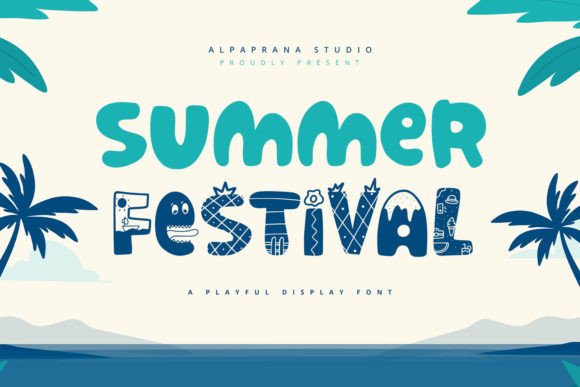
This typeface is characterized by its dual nature. The uppercase letters are not merely standard characters; they contain cute summery decorations that act as built-in graphical elements. Conversely, the lowercase set functions as a quirky display script, maintaining a casual flow without becoming illegible. For professionals managing seasonal campaigns, event promotions, or product packaging, understanding the practical application of Summer Festival is essential to determining if it fits their current workflow and brand identity.
Deconstructing the Design Aesthetic
The primary appeal of Summer Festival lies in its decorative uppercase glyphs. Unlike traditional serif or sans-serif fonts where ornamentation must be added manually via vector software, this font integrates those details directly into the character set. You might find palm leaves, sunbursts, or floral motifs intertwined with the letterforms. This feature significantly reduces production time for designers creating headers, logos, or badge-style graphics. Instead of layering multiple elements to achieve a festive look, a single line of text can convey the entire visual message.
The lowercase letters offer a different utility. Described as quirky, they provide a handwritten feel that suggests authenticity and approachability. In marketing psychology, this "imperfect" human touch often resonates better with consumers than sterile, corporate typography, particularly for small businesses, artisanal brands, and community events. When paired with the decorated capitals, the contrast creates a dynamic rhythm that guides the reader's eye across the headline. However, it is crucial to note that this is a display font. Its strengths are maximized at larger sizes, typically above 24 points, where the intricate details of the uppercase decorations remain crisp and the quirks of the lowercase do not hinder recognition.
Practical Applications in Professional Workflows
For marketers and entrepreneurs, the versatility of a font like Summer Festival can be a valuable asset during specific campaign cycles. Its most obvious application is in the hospitality and events sector. Consider a beach resort launching a summer cocktail menu, a local brewery hosting a solstice party, or a boutique organizing a mid-year sale. In these scenarios, the font acts as an immediate visual cue, signaling to the audience that the content is related to leisure, fun, and warmth.
Beyond event signage, the font holds potential for product packaging. Artisanal food producers, such as those selling lemonades, ice creams, or tropical fruit jams, can leverage the decorative uppers to create shelf appeal without expensive custom illustration. The font effectively bridges the gap between a standard typeface and a custom logo mark. For bloggers and content creators, using Summer Festival in social media graphics or YouTube thumbnails can increase click-through rates during the summer months by aligning the visual presentation with seasonal search intent and user expectations.
Educators and publishers focusing on children's materials or summer reading programs may also find value here. The playful nature of the glyphs engages younger audiences, making worksheets, certificates, and book covers feel less formal and more inviting. The key to successful implementation is restraint. Because the uppercase letters are heavily decorated, using all-caps for long sentences can result in visual clutter. The most effective usage involves short headlines, acronyms, or initial caps where the decorative elements can shine without overwhelming the viewer.
Evaluating Usability and Technical Consistency
When integrating any new asset into a professional library, reliability and consistency are paramount. Summer Festival performs well in standard design environments, supporting common file formats compatible with major software suites like Adobe Illustrator, Photoshop, and InDesign, as well as web-based tools like Canva. For web developers, ensuring the font renders correctly across browsers is vital. While display fonts are less commonly used for body text, if implemented via @font-face for large headings on a website, one must verify that the decorative strokes do not pixelate on lower-resolution screens.
The flexibility of the font allows for various color treatments. Since the decorations are part of the glyph, changing the text color automatically updates the ornaments, ensuring brand consistency. This is particularly useful when adapting a single design for multiple platforms or print variations. However, users should be aware of kerning challenges inherent to decorative fonts. The irregular shapes of the decorated uppers may require manual adjustment of letter spacing to ensure optimal balance. A professional workflow should always include a proofing stage to check for collisions between the decorative elements and adjacent characters.
Who Benefits Most from This Asset?
The ideal user for Summer Festival is a creative professional or business owner who needs to produce high-volume seasonal content quickly. Freelance graphic designers will appreciate having a go-to font for summer briefs, reducing the time spent searching for suitable typography. Small business owners who manage their own marketing can use it to elevate their DIY designs, giving them a polished, custom feel without hiring an illustrator.
Conversely, this font may not be suitable for every project. Corporate entities requiring a严肃 (serious) or minimalist aesthetic should avoid it, as the playful decorations conflict with formal brand guidelines. Similarly, projects requiring extensive body copy or small print sizes will suffer from reduced legibility. It is a specialized tool, not a universal solution. Its long-term value lies in its ability to be archived and redeployed annually. Unlike trend-heavy fonts that may look dated within a year, the classic themes of summer—sun, nature, celebration—ensure that Summer Festival remains relevant season after season.
Final Recommendations for Implementation
To maximize the effectiveness of Summer Festival, pair it with a clean, neutral sans-serif or serif font for body text. This contrast ensures that the decorative headlines stand out while the supporting information remains easy to read. When designing logos, consider using only the decorated uppercase initials to create a monogram effect, which can serve as a versatile icon for social media profiles or favicons.
In conclusion, Summer Festival represents a thoughtful addition to a designer's toolkit. It solves a specific problem: how to convey a festive, summery atmosphere quickly and authentically without resorting to clip art. By combining decorative uppercase letters with a quirky lowercase set, it offers a unique voice that can enhance invitations, packaging, and digital campaigns. While it requires careful handling regarding sizing and spacing, its potential to elevate seasonal creations makes it a worthwhile investment for those looking to capture the spirit of the season in their work. Whether you are a seasoned agency art director or a hobbyist crafting party invites, this font provides the necessary flair to make your summer projects memorable.