Unlocking Creative Potential: A Deep Dive into the Mindflow Display Font
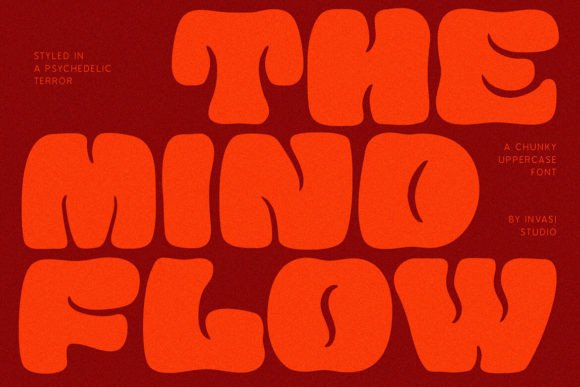
In the ever-evolving landscape of graphic design, typography serves as the voice of visual communication. It is not merely about choosing letters; it is about selecting a personality that resonates with your audience. Among the myriad of options available today, Mindflow stands out as a distinctive choice for designers seeking to blend nostalgia with modern sophistication. This fat, chunky display font captures the chic elegance and playfulness of a bygone era while remaining perfectly suited for contemporary projects.
Whether you are a seasoned branding expert or a hobbyist looking to elevate your personal projects, understanding the nuances of Mindflow can transform how you approach visual identity. This article explores the origins, characteristics, and practical applications of this unique typeface, helping you understand why it has become a favorite in the design community.
The Essence of Mindflow: Where 1970s Psychedelia Meets Modern Flair
To truly appreciate Mindflow, one must first understand its aesthetic roots. The font is heavily inspired by the classic psychedelic movements of the 1970s. During this vibrant decade, design was characterized by bold colors, swirling patterns, and typography that refused to be rigid. Mindflow channels this energy through its charmingly bold design, offering an instant touch of modern flair that feels both retro and fresh.
Unlike standard sans-serif fonts that prioritize uniformity and geometric precision, Mindflow embraces irregularity. Its curves are not perfectly mathematical; instead, they possess an irregular curve and surface that mimics the imperfections of hand-drawn lettering. This "handmade feel" is crucial in a digital age where perfection is often automated. By introducing these subtle organic variations, the font injects warmth and humanity into digital screens and printed materials alike.
Why the "Handmade" Aesthetic Matters
In a world saturated with sleek, corporate minimalism, consumers are increasingly drawn to brands that feel authentic and approachable. The irregular surfaces of Mindflow signal to the viewer that there is a human touch behind the brand. It suggests creativity, craft, and a willingness to break the mold. This psychological impact makes the font particularly effective for businesses that want to appear friendly, innovative, and distinct from their competitors.
Versatility in Application: From Packaging to Visual Identity
The true power of Mindflow lies in its flexibility. While some display fonts are too niche to be used outside of specific contexts, Mindflow is remarkably adaptable. Its charismatic style allows it to flow effortlessly across various mediums, adding a touch of sophistication and charm to anything it touches.
Here are some of the primary ways designers are leveraging Mindflow in modern projects:
- Packaging Design: In the crowded retail environment, product packaging must grab attention within seconds. Mindflow's chunky weight and playful curves make it ideal for food products, craft beverages, and artisanal goods. It communicates quality and fun simultaneously.
- Poster Design: For event posters, music festivals, or art exhibitions, the font's bold presence ensures readability from a distance while maintaining artistic integrity. The 1970s vibe works exceptionally well for retro-themed events or modern gigs seeking a vintage aesthetic.
- Logo Design: A logo needs to be memorable. Mindflow's unique glyph shapes help create logotypes that stand out without requiring complex iconography. The font itself becomes the brand mark.
- Visual Identity Design: Beyond just a logo, a full visual identity system requires consistency. Mindflow can be used in headlines, social media graphics, and merchandise to create a cohesive brand language that feels lively and engaging.
Technical Excellence: The Power of PUA Encoding
While the aesthetic appeal of Mindflow is undeniable, its technical construction is equally impressive. One of the most significant features of this font is that it is PUA encoded. For those unfamiliar with the term, PUA stands for "Private Use Area." In the context of typography, this is a game-changer for accessibility and ease of use.
Many decorative fonts come with a plethora of special characters, ligatures (combined letter forms), and alternate glyphs that are difficult to access without complex software shortcuts or character map tools. However, because Mindflow is PUA encoded, you can access all of the amazing glyphs and ligatures with ease. This means that whether you are using Adobe Illustrator, Photoshop, Canva, or even Microsoft Word, these special characters appear directly in your font list or are easily selectable via standard input methods.
- Efficiency: Designers save valuable time not having to hunt for specific alternates in external menus.
- Creativity: Easy access to ligatures encourages experimentation. You can quickly swap out standard letter combinations for more stylized versions to see what fits best.
- Consistency: Ensuring that every team member uses the correct glyphs is simpler when the encoding is straightforward, reducing errors in final production files.
Bridging the Gap Between Beginner and Pro
This technical feature makes Mindflow an excellent choice for beginners who might be intimidated by complex typographic settings, while still satisfying the needs of experienced professionals who demand workflow efficiency. It removes the barrier between having an idea and executing it, allowing your creativity to flow effortlessly.
Integrating Mindflow into Modern Workflows
Understanding how to integrate a font like Mindflow into your daily activities requires a shift in perspective. It is not just a tool for making things look "pretty"; it is a strategic asset in communication.
In education, for instance, teachers creating engaging materials for younger students can use Mindflow to make learning aids feel less sterile and more inviting. In business, startups looking to disrupt traditional markets can utilize the font's playful nature to signal innovation. Even in technology, app interfaces that aim for a gamified or community-driven feel can benefit from the friendly curvature of the typeface.
However, it is important to clarify a common misunderstanding: Display fonts like Mindflow are generally not suitable for long-form body text. Their bold, irregular nature is designed for headlines, titles, and short bursts of text. Using them for paragraphs can reduce readability. The key is balance—pair Mindflow with a clean, simple sans-serif or serif font for body copy to let the display font shine where it matters most.
Conclusion: Let Your Creativity Flow
Mindflow is more than just a collection of letters; it is a bridge between the nostalgic charm of the 1970s and the dynamic needs of modern design. Its fat, chunky structure commands attention, while its handmade imperfections invite connection. Whether you are designing a new logo, crafting a poster for a local event, or developing a comprehensive visual identity, Mindflow offers the versatility and technical ease required to bring your vision to life.
By choosing a font that is both charismatic and adaptable, you empower your projects to speak with confidence and style. As you explore the possibilities of PUA-encoded glyphs and experiment with its bold curves, remember that the goal is to let your creativity flow effortlessly. With Mindflow, you have a partner in design that understands the importance of elegance, playfulness, and the enduring power of a well-crafted typeface.
Ready to transform your next project? Consider how the unique spirit of Mindflow can elevate your work from ordinary to extraordinary, proving that sometimes, the best way to move forward is to take inspiration from the past.