Cralter: Vintage Charm for Modern Brand Identity
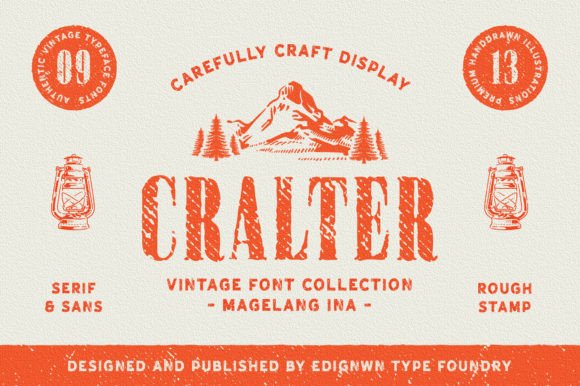
There is a specific kind of nostalgia that hits when you see an old travel poster or a vintage product label. It feels authentic, grounded, and full of character. That is exactly the vibe Cralter brings to the table. This typeface collection draws heavy inspiration from authentic typefaces found in old posters, capturing the rugged yet refined aesthetic of early 20th-century advertising. Whether you are a small business owner looking to refresh your logo or a designer working on a new packaging line, Cralter offers a bridge between historical charm and modern usability.
What makes this font family stand out is its versatility. Unlike many display fonts that only work at large sizes, Cralter includes both serif and sans-serif options. This duality allows you to build a cohesive visual language without needing to hunt for a secondary typeface. The serifs offer that classic, trustworthy feel often associated with established brands, while the sans-serif variants provide clean, legible lines perfect for digital interfaces or instructional text. Together, they create a robust toolkit for anyone serious about their brand identity.
Bringing Retro Authenticity to Contemporary Projects
When we talk about modern typography, we often think of sleek, minimalistic lines. However, there is a growing trend toward "humanizing" design through textures and historical references. Cralter fits perfectly into this movement. Its letterforms possess a distinct personality—slightly weathered but structurally sound. This makes it an excellent choice for projects that need to feel handcrafted rather than mass-produced.
Consider the application in logo design. A coffee shop, a craft brewery, or an artisanal bakery needs a mark that suggests quality and tradition. Using the serif variant of Cralter for the main logotype can instantly communicate these values. The thick strokes and subtle detailing catch the eye, while the overall structure remains readable even when scaled down for a social media avatar or a business card.
Beyond logos, this premium font shines in packaging design. Imagine a line of organic soaps or small-batch hot sauces. The label needs to stand out on a crowded shelf. Cralter's vintage aesthetic helps products tell a story before the customer even reads the ingredients. It suggests that the product inside is made with care, echoing the craftsmanship of the past. For editorial design, such as magazines or lookbooks, the font adds a layer of sophistication. It works beautifully for pull quotes and chapter headings, guiding the reader through the content with style.
Where Cralter Excels in Real-World Applications
The true test of any creative font is its adaptability across different mediums. Cralter proves its worth in a variety of scenarios:
- T-Shirts and Apparel: The bold nature of the display styles makes them ideal for graphic tees. They hold up well against fabric textures and printing methods like screen printing or DTG.
- Badges and Emblems: Many old posters featured circular or shield-shaped badges. Cralter's geometry complements these shapes, making it perfect for creating team logos, club emblems, or certification seals.
- Social Media Graphics: In a feed full of generic sans-serifs, a post featuring Cralter stops the scroll. It adds visual interest to quotes, announcements, and promotional banners.
- Web Design: While primarily a display face, the sans-serif members of the family can serve as effective headers on websites, providing a unique touch to landing pages without sacrificing load times or clarity.
It is important to note that while Cralter has a strong vintage soul, it does not feel dated. The curves are smoothed out for contemporary screens, ensuring that it looks just as good on a 4K monitor as it does on a printed billboard. This balance is crucial for maintaining professionalism while leveraging retro trends.
Enhancing Readability and Visual Hierarchy
A common misconception about vintage-inspired fonts is that they sacrifice readability for style. Cralter challenges this notion. The designers behind this typeface understood that for a font to be useful in commercial settings, it must be legible. The x-heights are generous, and the spacing between characters (kerning) is well-considered, preventing letters from colliding at smaller sizes.
Visual hierarchy is the backbone of effective communication. By using the different weights and styles within the Cralter collection, you can guide your audience's eye naturally. You might use the boldest serif style for a main headline to grab attention, then switch to the lighter sans-serif for subheadings to create contrast. This interplay establishes a clear order of information, making your design assets easier to digest.
Furthermore, consistency breeds recognition. When you use Cralter across your website, packaging, and marketing materials, you create a unified front. Customers begin to associate that specific look with your brand. Over time, this builds trust. People are more likely to engage with a brand that looks put-together and intentional. Whether you are designing a flyer for a local event or a full catalog for an online store, the consistent use of this font reinforces your message.
Practical Tips for Pairing and Implementation
Getting the most out of Cralter requires a bit of strategy. Here are some practical recommendations for integrating it into your workflow:
- Evaluate Project Fit: Before downloading, ask yourself if the project benefits from a vintage aesthetic. If you are designing for a high-tech fintech startup, Cralter might clash with the desired futuristic image. However, for lifestyle brands, hospitality, and creative agencies, it is often a home run.
- Master Font Pairing: Since Cralter already includes both serif and sans-serif options, you often don't need to look far for a partner. Try pairing the bold serif headlines with a clean, neutral sans-serif body text (like Inter or Roboto) if you need extended reading passages. Alternatively, mix the Cralter sans-serif headers with the Cralter serif body for a monochromatic but textured look.
- Test Readability: Always print a sample or view your design at 100% zoom. What looks good in a thumbnail might lose detail when printed on textured paper. Ensure that the intricate details of the serif edges do not disappear in low-resolution outputs.
- Check Licensing: As with any commercial font, review the license agreement carefully. Most premium collections allow for unlimited personal and commercial use, but it is vital to confirm if there are restrictions on the number of impressions for web use or if you need an extended license for merchandise intended for resale.
Designers should also experiment with color. Vintage posters often utilized muted palettes—mustards, deep reds, and forest greens. Applying Cralter in these colors can enhance its nostalgic feel. Conversely, placing it in stark black and white can give it a modern, editorial edge.
Ultimately, Cralter is more than just a set of letters; it is a design tool that evokes emotion. It reminds us of a time when posters were art and products had stories. By incorporating this display font into your work, you aren't just following a trend; you are tapping into a timeless aesthetic that resonates with audiences on a deeper level. Whether you are crafting a quote for Instagram, labeling a jar of homemade jam, or rebranding a local boutique, Cralter provides the character and flexibility needed to make your project stand out in a crowded marketplace.