Cyberend: Bridging Dystopian Aesthetics and Modern Legibility
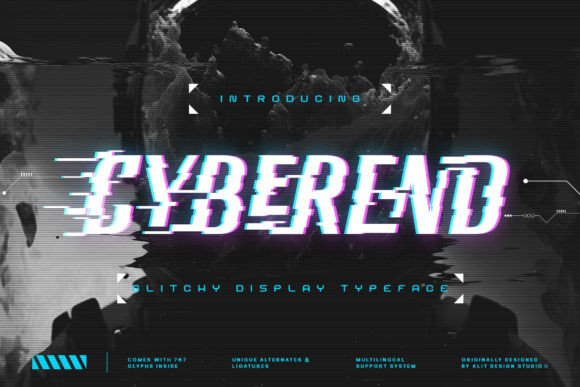
In the rapidly evolving landscape of digital design, finding a typeface that captures the spirit of the future while remaining functional for today's projects is a significant challenge. Designers often face a dichotomy: choose a font that looks incredibly futuristic but sacrifices readability, or select a clean, modern font that lacks character and thematic depth. Cyberend emerges as a compelling solution to this dilemma, offering a unique typographic experience that seamlessly marries the raw, edgy aesthetic of cyberpunk with the precision of square pixels and the sleek modernity of italic serifs.
As the digital world converges with futuristic design trends, Cyberend has become more than just a font; it is a tool for storytelling. It allows creators to infuse their work with a specific atmosphere—one of high-tech sophistication mixed with gritty, urban rebellion. This article explores the characteristics, applications, and practical considerations of using Cyberend in various professional and creative contexts.
The Anatomy of Dystopian Elegance
At its core, Cyberend encapsulates the essence of cyberpunk culture. This genre, known for its "high tech, low life" themes, requires a visual language that reflects both advanced technology and societal decay. Cyberend achieves this through what can be described as "dystopian elegance." The font does not merely look strange; it embodies a structured chaos.
The defining feature of Cyberend is its hybrid construction. On one hand, it utilizes square pixels to create the blocky, digital foundation reminiscent of early computer interfaces and retro-futuristic gaming consoles. This pixelated precision gives every character a sharp, high-tech appearance that resonates deeply with digital landscapes. On the other hand, the inclusion of italic serifs introduces a fluid dynamic. These serifs are not traditional; they are angled to suggest speed, forward momentum, and a touch of rebellion. This combination ensures that while the text feels grounded in a digital grid, it also possesses a sense of motion and life.
Why the Hybrid Approach Matters
Many purely pixelated fonts suffer from poor legibility, especially at smaller sizes or on lower-resolution screens. Conversely, standard italic fonts can feel too corporate or sterile for sci-fi projects. Cyberend bridges this gap. The pixel structure provides the thematic weight, while the serif details guide the eye smoothly across the line, enhancing reading flow. This balance makes it a versatile asset for designers who need to convey a specific mood without alienating their audience.
Versatile Impact Across Media
The true value of any typeface lies in its applicability. Cyberend is designed to make a bold statement across a wide array of mediums. Its versatility allows creators to infuse cyberpunk vibes into diverse projects, ranging from interactive digital interfaces to static print media.
Here are several key areas where Cyberend excels:
- Gaming Interfaces: For indie developers creating RPGs or shooters set in futuristic worlds, Cyberend provides an immersive UI experience. It works exceptionally well for health bars, inventory lists, and dialogue boxes, instantly setting the scene before the player even sees the graphics.
- Film and Video Titles: Motion graphic designers can leverage the italicized nature of the font to create dynamic title sequences. The inherent slant suggests movement, making it ideal for opening credits in sci-fi shorts or cyberpunk-themed music videos.
- Branding and Logos: Tech startups, esports teams, and nightlife venues often seek an identity that feels cutting-edge. Cyberend allows these entities to craft logos that stand out in a crowded market, signaling innovation and edginess.
- Web Design: When used for headers and call-to-action buttons, Cyberend can transform a standard website into an experiential journey. It is particularly effective for landing pages promoting technology products, virtual reality experiences, or digital art exhibitions.
Futuristic Legibility: Form Meets Function
A common misconception about stylized fonts is that they must sacrifice clarity for style. Cyberend challenges this notion by prioritizing futuristic legibility. Despite its avant-garde flair, each character is meticulously crafted to ensure readability. The spacing between the square pixels is optimized to prevent visual clutter, and the angle of the serifs is calculated to maintain distinct character shapes.
This focus on functionality means that Cyberend is not limited to large display text. While it shines in headlines, it can also be effectively used for short paragraphs, captions, and navigation menus, provided the background contrast is sufficient. This balance between design and utility is what separates a novelty font from a professional tool.
Practical Considerations for Designers
While Cyberend offers immense creative potential, it is important to approach its usage with strategic intent. Like any strong stylistic choice, it may not be suitable for every context. Here are some practical guidelines for evaluating its suitability for your project:
- Context is Key: Cyberend is perfect for themes involving technology, the future, gaming, or urban nightlife. However, it may feel out of place in contexts requiring traditional authority, such as legal documents, medical reports, or classic literature publications.
- Pairing Strategies: To maximize impact, consider pairing Cyberend with a neutral sans-serif font for body copy. This creates a hierarchy where Cyberend draws attention to headings and key information, while a simpler font ensures long-form content remains easy to read.
- Color and Contrast: The pixelated details of Cyberend can get lost if the color contrast is too low. Neon colors against dark backgrounds (a classic cyberpunk palette) usually yield the best results, highlighting the sharp edges and italic flow of the letters.
- Scale Matters: While legible, the intricate pixel details are most appreciated at medium to large sizes. If using it for very small text, ensure you test it across different devices to confirm the pixels do not blur together.
Real-World Scenarios and Applications
To understand the transformative power of Cyberend, let us look at a few hypothetical scenarios where this font changes the trajectory of a project.
Imagine a mobile app developer launching a new fitness tracker focused on "bio-hacking" and performance optimization. Using a standard font like Arial would fail to communicate the cutting-edge nature of the product. By implementing Cyberend for the app's logo and dashboard headers, the developer instantly signals to the user that this is not just a step counter; it is a piece of futuristic equipment for upgrading the human body.
Consider a music festival promoter organizing an event featuring electronic and industrial bands. The poster design needs to scream energy and modernity. Utilizing Cyberend for the lineup and date information adds a layer of texture and attitude that plain text cannot achieve. The italic serifs give the impression that the music itself is moving fast, creating anticipation before a single note is heard.
In the realm of e-commerce, a store selling mechanical keyboards and custom PC parts can use Cyberend to categorize products. Instead of generic labels, the site can use themed headers that make the shopping experience feel like navigating a high-tech marketplace. This immersion can increase user engagement and time spent on the site.
Evaluating Suitability for Your Needs
Before downloading or purchasing Cyberend, creators should ask themselves a few critical questions. Does the project benefit from a narrative of the future? Is the target audience receptive to edgy, non-traditional aesthetics? Will the font be used primarily for display purposes, or is there a need for extensive body text?
If the answer to these questions leans towards "yes," then Cyberend is likely an excellent fit. It is a font that demands attention and rewards those who use it with a distinct visual identity. However, if the goal is invisibility—where the text should recede and let the content speak without stylistic interference—a more neutral typeface might be preferable.
Conclusion: Unleashing the Future
Cyberend represents a significant step forward in typographic design for the digital age. It successfully captures the zeitgeist of our increasingly technological society, blending the nostalgia of pixel art with the sleekness of modern vector design. By offering a unique combination of pixelated precision and italicized momentum, it provides designers with a powerful tool to evoke emotion and set the tone.
Whether you are designing a video game interface, crafting a brand identity for a tech startup, or creating promotional materials for a cultural event, Cyberend offers the versatility and impact needed to stand out. It invites audiences to step out of the mundane present and into a stylized, cyberpunk-inspired future. As we continue to push the boundaries of digital creativity, fonts like Cyberend remind us that even the smallest details—like the shape of a letter—can transport us to new worlds.
Unleash the power of Cyberend in your next project and discover how the right typeface can transform a simple message into an immersive experience. The future of design is here, and it is written in pixels and serifs.