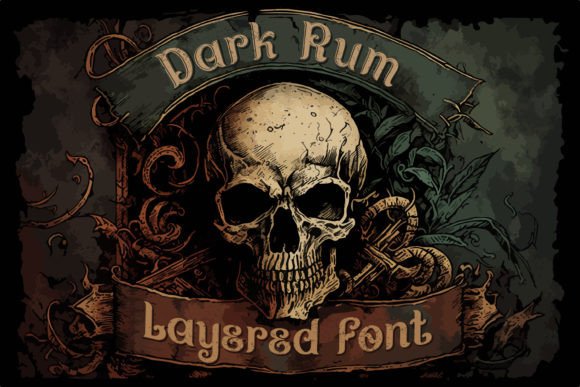
Evaluating Dark Rum: A Vintage Horror Display Font for Spooky Designs
In the realm of graphic design, typography serves as the primary vehicle for establishing tone and atmosphere. For projects rooted in horror, maritime history, or supernatural themes, selecting the right typeface is critical. Dark Rum emerges as a specialized display font designed to evoke the eerie aesthetics of pirate lore and old-world superstition. This article provides an objective evaluation of Dark Rum, exploring its characteristics, ideal applications, and potential limitations to help designers determine if it aligns with their specific project goals.
Understanding the Aesthetic of Dark Rum
Dark Rum is classified as a vintage horror display font. Its visual identity is constructed around a distressed texture that mimics the appearance of aged parchment, weathered wood, or ink-stained paper. The design philosophy behind this typeface centers on imperfection; the glyphs feature irregular edges and a "rum-soaked" quality that suggests decay and exposure to the elements. Unlike clean, geometric sans-serifs or traditional serifs intended for body copy, Dark Rum is engineered to function as a headline or accent element where atmospheric impact is the priority.
The font's character set typically includes uppercase letters, numerals, and punctuation marks styled to maintain consistency with its thematic core. The distressing is not merely an overlay but is often integrated into the vector shapes themselves, ensuring that the texture remains crisp regardless of scaling, provided the file format supports it. This makes it a versatile tool for both digital screens and print media, though its legibility constraints must be carefully managed.
Reasons to Consider Dark Rum for Your Projects
Designers and content creators may find Dark Rum appealing for several practical reasons related to thematic consistency and mood setting.
- Immediate Atmosphere: The font instantly communicates a sense of danger, mystery, and antiquity. It reduces the need for additional textural overlays or background elements to establish a spooky tone.
- Niche Specificity: Few typefaces successfully bridge the gap between nautical history and supernatural horror. Dark Rum occupies this specific niche, making it highly effective for pirate-themed events, Halloween promotions, or historical fiction covers.
- Visual Interest: The distressed nature of the font adds depth to flat designs. It breaks up solid blocks of color and introduces a tactile quality that can make digital designs feel more organic and grounded.
Benefits and Practical Applications
When evaluating the utility of Dark Rum, it is essential to identify scenarios where its unique traits provide a distinct advantage. The font is a strong fit for projects requiring a narrative hook through typography alone.
Ideal Use Cases
The following situations represent optimal environments for deploying Dark Rum:
- Event Branding: Invitations and posters for Halloween parties, haunted house attractions, or pirate-themed festivals benefit significantly from the font's immersive quality.
- Packaging Design: Limited edition labels for spirits, particularly rums or whiskeys, or specialty food items like spiced candies can utilize the font to suggest artisanal craftsmanship and age.
- Book Covers and Movie Posters: Titles for genres involving gothic horror, maritime adventure, or supernatural thrillers gain immediate credibility when rendered in a typeface that reflects the story's setting.
- Gaming Assets: User interface elements, logo designs, or title screens for video games set in cursed oceans or ghost towns can leverage the font to enhance player immersion.
In these contexts, the primary goal is emotional resonance rather than rapid information transmission. Dark Rum excels here because it acts as a visual shorthand for "danger" and "history," allowing the audience to intuitively grasp the theme before reading the content.
Tradeoffs and Design Considerations
While Dark Rum offers significant stylistic benefits, it comes with inherent tradeoffs that designers must acknowledge. The very features that make it atmospheric also limit its functional versatility.
Legibility Constraints
The distressed texture and irregular stroke widths of Dark Rum inevitably reduce legibility compared to standard typefaces. At small sizes or low resolutions, the intentional "noise" in the glyph shapes can cause characters to blur together or become indistinguishable. Consequently, this font is unsuitable for body text, long-form articles, or any application where quick reading is required. It should be reserved exclusively for headlines, logos, and short captions.
Contextual Limitations
The specificity of the font's theme can be a double-edged sword. While perfect for horror and pirate motifs, it is entirely inappropriate for corporate branding, medical communications, or modern tech interfaces. Using Dark Rum outside its intended thematic lane can result in a disjointed user experience, confusing the audience and undermining the professionalism of the design.
Technical Execution
When implementing Dark Rum, attention must be paid to contrast. Because the font relies on broken lines and textures, it requires a high-contrast background to remain visible. Placing it over busy patterns or low-contrast colors may render the text illegible. Designers should test the font across various background colors and ensure sufficient padding around the text to allow the distressed edges to breathe.
Comparing Alternatives
Before finalizing a decision to use Dark Rum, it is prudent to consider whether alternative typographic solutions might better serve the project's needs.
If the project requires a horror aesthetic but demands higher readability, a cleaner serif font with subtle distressing or a dedicated "grunge" sans-serif might be a more balanced choice. These alternatives can convey unease without sacrificing the clarity needed for informational subheads or calls to action.
Conversely, if the goal is strictly nautical without the supernatural element, a classic slab serif or a traditional script font might offer a more historically accurate representation of maritime signage, avoiding the overt "spooky" connotations that Dark Rum carries.
Furthermore, for projects targeting a global audience, one must consider character set support. Specialized display fonts sometimes lack extensive language support or special glyphs found in more comprehensive type families. Verifying the inclusion of necessary ligatures, alternate characters, and international symbols is a crucial step in the selection process.
Making the Final Decision
Selecting a typeface is a strategic decision that impacts the overall success of a design. Dark Rum is a powerful tool when used within its specific domain. It is best suited for designers who need to create an immediate, visceral connection to themes of piracy, ghosts, and ancient curses. Its value lies in its ability to transform a standard layout into a narrative experience.
However, it is not a universal solution. If your project prioritizes accessibility, long-form readability, or a neutral corporate tone, Dark Rum is likely not the appropriate choice. The decision ultimately rests on the hierarchy of your design goals: if atmosphere and thematic immersion are paramount, Dark Rum offers a compelling, ready-made solution. If clarity and versatility are the primary objectives, exploring broader, less stylized type families would be the more pragmatic approach.
By weighing the atmospheric benefits against the functional limitations, designers can effectively determine whether Dark Rum is the right typographic anchor for their next creative endeavor.